Author: aaronjbarnes

  • U Mad Bro? The Future of Emotional Intelligence and Consumer Psychology

    U Mad Bro? The Future of Emotional Intelligence and Consumer Psychology

    How well do you know how you’ll react to situations? Could you control your emotions in situations that you know would send you over the edge? Would you describe yourself as a good judge of other’s emotions? If you answered yes to any of these questions, then you might have a high EQ, or emotional quotient. An EQ is a measurement of Emotional Intelligence. Take a quick assessment of your personal EQ here.
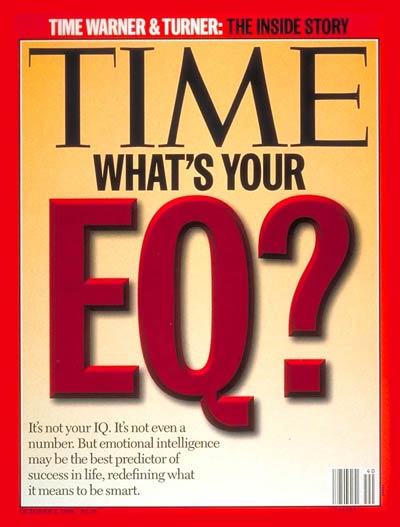
    Time cover (Nov. 2011)
    Time cover (Nov. 2011)

    Discussions regarding emotional intelligence are occurring in more and more classrooms around the country. Educators and academic administrators recognize the numerous benefits of improved emotional intelligence. As this concept proliferates our public education system and becomes a mainstay in grade school curriculum, I start to wonder how much it will affect marketers’ ability to exploit our emotions.

    Behavioral economist, George Loewenstein is just one of several researchers who have helped us understand that emotions have a huge affect on your purchasing decisions. Marketers know this and are fervently at work trying to best position their products and advertisements to capitalize on our emotional vulnerability. Just watch a couple episodes of Mad Men on Netflix.

    Some research suggests that a higher emotional quotient improves purchase decisions. This makes sense on the surface. Emotional intelligence varies widely amongst the American population. Most people probably overestimate their own ability to perceive, control, or evaluate emotions. Therefore, the select few in our society who have high EQs are probably among the rational decision-making elite. The rest of us are shamefully susceptible to the emotional ploys that marketers make on our subconsciouses.

    With that considered, you would think that businesses would want to prevent emotional intelligence from being taught in schools at such a young age. More emotionally intelligent consumers would likely make it more difficult to sell impulse tubs of Ben & Jerry’s and the like. However, I think that the closer our school systems’ curriculums get to standardizing emotional intelligence, the quicker American society will become emotionally captive consumers.

    Think of the recent increase in technology exposure and education. My 2 year old nephew already understands how to manipulate touch screen devices and other electronics. By the time he is an active consumer, he will be a prime target for the slew of technological advances that await us in the future. As technological knowledge became easily available through increased exposure and proliferation throughout American society, our economy reaped the benefits (debatable, I suppose) of a correlated spike in technological consumer goods.
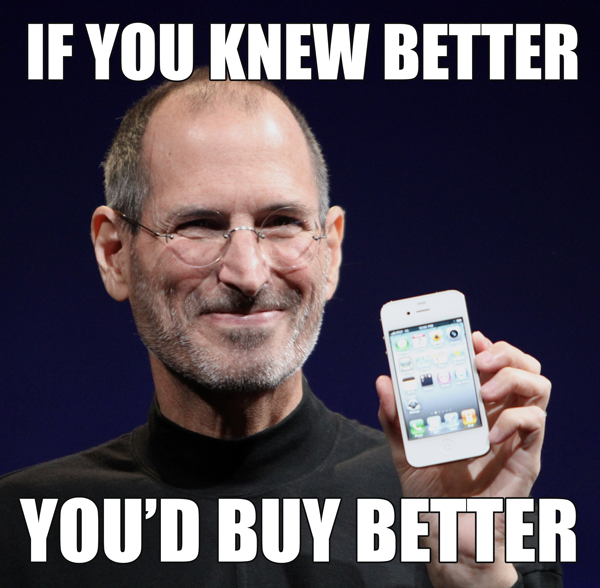
    Buy-Better

    In a similar fashion, I think future generations will be even more vulnerable to emotional marketing campaigns than we are today. The ability to educate on emotional intelligence assumes the teacher obtains a certain amount of knowledge on the subject. In other words, if mainstream America increases its baseline emotional intelligence by a certain amount, imagine how much more experts on the subject will know and be able to use for their benefit?

    Admittedly, I’m being a little pessimistic, but imagine it for a second. Do you think it could happen? Could you withstand the emotional onslaught? Feel free to comment and share below!

  • Consumer Behavior Trends: Mobile Payments are the Wave [Infographic]

    Consumer Behavior Trends: Mobile Payments are the Wave [Infographic]

    In light of Paypal’s most recent update that allows customers to make purchases from thousands of merchants using your online Paypal balance, I decided to look further into what’s going on in this mobile space. It’s incredibly fascinating…and utterly terrifying. I found this infographic to help explain what’s going on in the area.

    The most important mobile payment infographic. Ever.

    The most important mobile payment infographic. Ever.

    On one hand, paying for goods/services with mobile devices is technologically forward.

    Mercator Advisory Group just released a study explaining how minorities and adults are leading the way with mobile payment use.

    This makes sense.

    What makes this finding interesting is that these two populations loosely define the Millennial generation–the future of this country’s consumer base. millennials 2This means that researchers like me will be interested in investigating what elements are at play when/if they decide how they interact with mobile environments. Wish me luck, lol.


    The Federal Reserve Bank of Boston confirms this research area by reporting that consumers almost never switch their payment type over time. This means that if minorities and young adults latch on to mobile payments like the above report suggests, then they will be pretty loyal to this method into old age. (Think about all the seniors you’ve stood behind in the grocery store who still pay with check!)

    On the other hand, what about all of the consumer data that businesses will be able to collect?

    Big-Brother-is-Watching

    We’re already concerned with the data that Facebook has on us and they’re getting into the mobile payments business as well. Think about how much more poignant the information Paypal will be able to analyze as they suggest nearby businesses that accept Paypal payments that are within a quarter mile of your workplace.

    1. They’ll know where you spend a lot of your time.
    2. They’ll have loads of information about your purchase preferences
    3. Who knows what else they’ll know…

    One company found that their customers were largely resistant to mobile payments perhaps for that very reason. I think that mobile payments will take over the majority of daily purchases. Like most revolutionary ideas, it’s scary at first. Decades from now, we’ll wonder how we ever got along without them.

    What do you think? Do you use mobile payments already? What do you think of them? Discuss in the comments.

  • Why I’m Leaving iPhone

    Why I’m Leaving iPhone

    Here we are in September and wouldn’t you know it, Apple released another version of the iPhone. Arguably the most successful smart phone to date, the iPhone routinely captures the attention of Apple fanatics and detractors.

    If you’ve ever held a conversation with me about cellular phones and/or mobile technology then you know I’m a faithful Apple supporter. Usually, I’m fully submissive to every single idea that they’ve ever had (let’s not even talk about that Apple Maps fiasco…or heaven forbid we bring up their failed attempt at a music social network).

    For the most part, I’m still an extremely loyal brand ambassador for Apple products. What’s not to love? Their products are consistently cutting-edge, easy to use, and cool to own. When I was first able to afford my own iPod, I hurried to buy because I was enticed by the allure of social status and intrigue the Apple brand afforded me. I felt cooler. I felt more interesting. As I acquired more Apple products, I felt that the brand became a part of me..

    None of my Apple products were as much a part of me as my iPhone. I mean, I literally carry it everywhere I go. For the majority of the past four years, associating myself with the iPhone has meant that my self concept was associated with the sleek, cutting-edge, superior qualities that the iPhone embodied.

    Early in our relationship, it was easy for me to defend my precious self-validating iPhone against petty competitors. You have a Nokia? Nahh, you can’t seriously think that your phone compares to mine! Blackberry? Bah! Who uses BBM in 2013? Palm Pilot? Pssh! Styluses are for sissies. I gladly volunteered my time as an ad hoc salesman for iPhone.

    Then things started to change.

    I began to notice that my arguments for why iPhone was superior than other phones sounded weaker and weaker until they were ultimately untrue. I ignored this for a while and thought, “You’re tripping. iPhone is still the best thing out. Everyone has one. They have to be doing something right.”

    This went on for a while until about a month ago when I decided that I’m going to leave iPhone behind.

    I told myself that I wanted to learn something new. I told myself that Apple’s innovation seemed to plateau. I told myself that I was bored with iPhone. And while all of those things are likely to have some part to play in my decision, I feel that there are psychological rumblings deeper in my subconscious.

    Simply put: the iPhone brand just does not represent me as well as it used to.

    Because I identified so closely with my iPhone, the realization that we may not be as perfectly matched as I thought severely disrupted my psyche. I reached a point where the tension between why I thought I owned the iPhone (it was an extension and validator of my self concept) and my reality (there are cooler phones out there that more closely resemble my self concept) finally manifested itself in an epiphany: I’m leaving iPhone.

    Think about the premise of movie, Inception. The engineers had to implant the  seed of an idea deep within their target’s subconscious so that it could develop into actions that the target believed to be their own. In a similar way, the cognitive dissonance I experienced with my iPhone led me to this current state of dissatisfaction. Social Psychologist Leon Festinger coined the term, “cognitive dissonance,” in his book, When Prophecy Fails, in 1956.

    My urge to abandon my iPhone was exacerbated with Apple’s latest release. I originally purchased an iPhone to separate myself from other phone users who weren’t as cool as I thought I was. Not only did Apple fail to appropriately innovate in a way that reinforced my perception of my personal coolness, now even MORE people around the world would have access to the technology due to its 5C extension…or as one source put it, “The First iPhone You Don’t Want.”

    Meanwhile, all of the other close competitors’ advertisements seem to be speaking directly to me now…or, at least about people like me. Take the new Nokia, the phone for the photographer–or Instagram addict. How about the Moto X by Google? It’s the phone that let’s you customize every aspect of its appearance and operate touch-free. I think even the most staunch iPhone support can yield some innovation ground to the industry’s heir apparent, Samsung Galaxy.

    What do you think? Am I just a simp being suckered in by all the new phones coming out? Are you getting tired of your iPhone too? Discuss it in the comments or on twitter.

  • Don’t Ask Your Friend How Much They Spent on Groceries

    Don’t Ask Your Friend How Much They Spent on Groceries

    An interesting new trend of the last few years has been the ability to order groceries and have them delivered to your doorstep. Several businesses are making money by taking advantage of our increasing laziness (or busyness) and delivering high quality foodstuffs to our homes and collecting nominal delivery fees. (Lifehacker outlines more reasons why you should have your groceries delivered.)

    Online Grocery Shopping

    This trend and a recent study by dunnhumby (a consumer science firm) which empirically demonstrated that streaks of price sensitivity exist among all types of consumers got me thinking about the future of pricing in the grocery delivery space.

    Airfare

    It is common knowledge not to ask your cabin mate on your LaGuardia (NYC) to Midway (CHI) flight how much they paid for their ticket. One of you is bound to be upset. Primarily because we purchase airline tickets in an imperfect information environment, airline companies are able to charge a wide variations of prices to customers. The academic term for this is price discrimination.

    I think the same possibility is lurking around the corner for grocery delivery services.

    images-1

    Imagine that a companies like FreshDirect begins to generate more traffic than brick-and-mortar grocers such as Piggly Wiggly. As customers begin to trust grocery delivery services more and more, their knowledge of what others are paying for groceries decreases–or at least is controlled by their primary grocery provider.

    If grocery deliverers were to monitor the price sensitivity of its consumers and target each segment according to the research from the dunnhumby report, it is quite possible that a company like FreshDirect could charge your neighbor a few dollars less for the same basket of goods because they proved to be more price sensitive.

    What do you think? Do you agree/disagree? Join the conversation in the comments section below.

  • Marketing Monitor: Tumi Uses B-List Celebrities to Identify with Target Market

    Marketing Monitor: Tumi Uses B-List Celebrities to Identify with Target Market

    Stuart Elliot of the New York Times recently wrote about how Tumi Holdings is challenging the luxury luggage industry’s common marketing practice of using the most recognizable celebrities as brand endorsers.

    I had never heard of Tumi before this article (why would I? I’m not a high-class world-traveler…yet), but I have definitely heard of some of the company’s celebrity-laden competition. Huge, world players such as Coach, Louis Vuitton, and Samsonite occupy this space and most of them use well known celebrities to communicate their brand’s exclusivity and luxuriousness.

    Tumi, however, is taking a much more interesting approach at this. They’re challenging whether or not their target audience, or “global citizens” as Tumi describes them, identify more with mega-stardom or more attainable success within specific industries.

    Tumi3

    I imagine that Tumi’s hope is that their “global citizen” target customer who views their advertisements would ask himself, “What makes them famous?” and reason, “I have a moment. Let me Google them.” Upon doing so, they’d find out that Novak Djokovic, one of Tumi’s B-list celebrity endorsers, is ranked world no. 1 by the Association of Tennis Professionals. Of course the ideal scenario is that the customer gets lost in google’s labyrinth of information and somehow connects all of that time and energy spent back to Tumi–that’s the kind brand engagement that companies dream of.

    Agent Obvious asks, “What if the target customer dismisses the B-list endorser turns to the Angelina Jolie Louis Vuitton advertisement out of sheer face-recognition?”

    I think that is a risk Tumi is willing to take. They are already miles behind industry leaders in terms of market share and revenue, so I’d say that they’re looking for any way to differentiate themselves from the market leaders and establish a deeper psychological connection with their consumers.

    They’re hoping that consumers believe it easier to achieve success as a business executive of a Fortune 500 company, like Tumi endorser Paolo Ferrari of Pirelli, than it is to become a movie or pop-star. If Tumi can position themselves closer to where their target consumers envision themselves, it might spell success for the 28-year old firm.

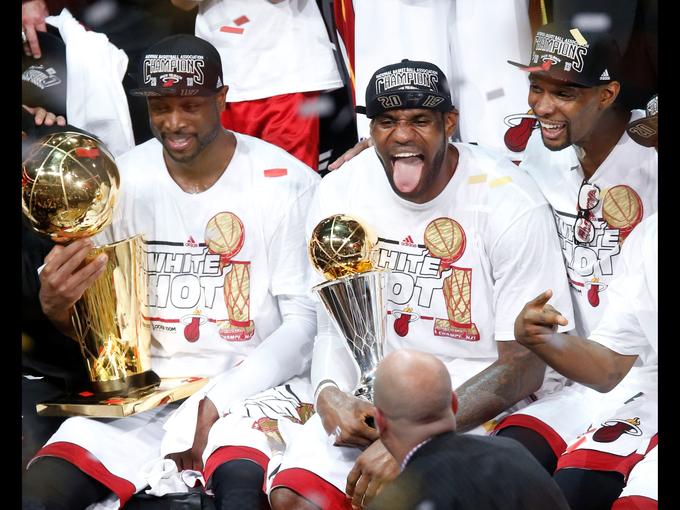
    1371796364000-USP-NBA-Finals-San-Antonio-Spurs-at-Miami-Heat-051-1306210245_4_3It would be equivalent to Reebok partnering with a college basketball star who didn’t get drafted to the NBA, but accomplished notable professional feats and retained his basketball skills well enough to lead his local intramural team to a championship.

    I plan on following Tumi for a few quarters to see if their new ad campaign has any traction and raises their quarterly performance. What do you think of their strategy? Comment below!