Blog

  • The “Why” Inside Dapper Black Box

    The “Why” Inside Dapper Black Box

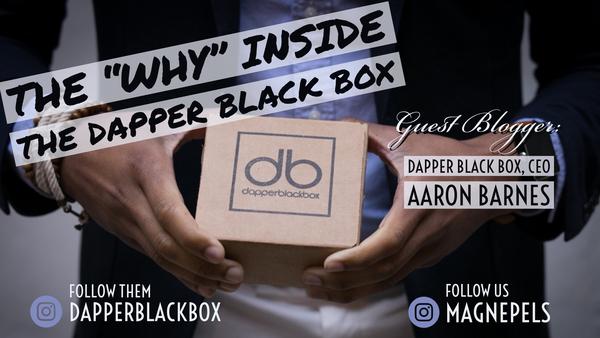
    The subscription service business platform is a growing phenomenon. It adheres to the shoppers desire of convenience and cost-efficiency. Hear from Dapper Black Box Founder, Aaron Barnes, as he breaks down the “Why” inside the box as their company also adheres to some shoppers third desire, consciousness.

    The first thing many of us do when we decide to buy black is search for black-owned directories online. Poring over google search engine pages, Facebook groups, Tumblr threads, and the like, you can come across dozens of directories without a lot of overlap.

    That’s a big problem. It’s such a big problem that I thought I wanted to fix it at first.

    Encouraging investment

    But the more I thought about what I really wanted for a business that I created, Dapper Black Box’s mission emerged. Dapper Black Box (DBB) exists to encourage investment into black-owned businesses (BOBs).

    Though business directories certainly do this, I wanted to take a more direct route.

    Championing collective energy

    One critique I have of black-owned directories was that it they make it difficult for consumers to choose between options. There are few signals to the consumer that any business is better positioned to meet his needs. At the same time, it’s in every independent business’ interest to self-promote, but when everyone is saying, “Look at me! Buy from me!” it’s hard to choose who to buy from. I thought DBB could serve as a third-party entity focused on championing the collective energy that each individual business puts out into the digital marketplace. In other words, DBB says, “Look at all of this amazing work that BOBs are doing in this space!”

    Selling an idea

    It was when I focused on the idea of encouraging investment into black businesses that creating DBB to be a subscription service began to make sense. Not only are subscription services an easy-to-manage business model for my day-career, but they are also an excellent vehicle for advancing our mission.

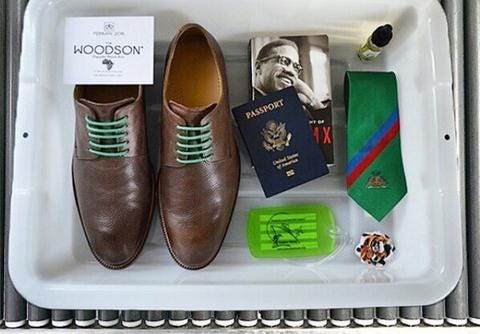
    Again, DBB exists to encourage investment. Using a subscription business model allows us to encourage consistent investment by recycling the recurring payments back into black-owned businesses. We go beyond pointing to worthy BOBs and make it easy to support them by curating 4–5 items from different brands each month.

    Continuing to meet our audience’s needs

    Now that we’ve sent over 2,500 subscriptions in less than 2 years, I’m convinced that we’re beginning to meet a need in the market. Our goals over the next phase of DBB’s growth are to continue to meet our target audience’s needs by expanding what it means to be dapper and celebrating blackness more generally.

    We’re addressing the first need by connecting BOBs that don’t clearly fit a traditional “dapper” definition with our partner, Impact Service Promotions (sp?). ISP is a BOB within my family in-law that helps supply businesses with thousands of promotional materials. We have partnered with ISP to supply developing BOBs with promotional materials that can help get the word out about their businesses.

    I’m especially excited about how we’re addressing the second need. DBB subscribers/followers know that we name each month’s curation after an influential black man (e.g., March’s DBB was named in honor of Clarence Avant). Up until the middle of 2016, we did not provide much information about the DBB namesake. Now, however, we’re digitally chronicling information about each DBB namesake through our YouTube series, “The Bigger Picture.”

    I’m always happy to discuss ideas about how DBB can continue to meet your needs. Please do not hesitate to contact me directly at aaron@dapperblackbox.com so we can chat!

    This article was originally published in Magnepels’ Blog on 4/6/17.

  • Build Brand Loyalty by Turning Away Customers

    Build Brand Loyalty by Turning Away Customers

    Inevitably as your business grows, you’re going to get to the point where people come to you looking for products or services that you don’t have.

    These are not the requests that you should be doing or at least thinking about doing. These are requests that stretch your business beyond your means or more importantly, beyond your mission.

    It’s in your (entrepreneurial) nature to want to meet your customers needs, no matter what they are, even if what they need is not a part of your current offering.

    Let me lay out why telling a customer “no,” or better yet, telling the customer “why not” can actually strengthen your brand and build more loyal customers.

    Let’s deal with the obvious. Telling customers “yes” all the time will keep them around. Think about stray cats: as soon as they sense that they can get a free meal from you, good luck trying to get rid of them.

    On the other hand, telling customers “no” all the time will turn them away. It’s best not to think about your customers like panhandlers, who deflect No’s like shells after an Invincibility Star.

    What you want, is to keep customers around who are good for your startup. Contrary to our snap judgments, you don’t achieve this by setting clear expectations and boundaries. Customers forget. Heck, customers may even ignore your Terms and Conditions. That’s ok.

    Instead, what you want to do is view the request as an strategic branding opportunity. 

    More than likely, there are reasons why you don’t do what your customer is asking. Maybe it’s money. Maybe it’s capacity. Ideally, you don’t already do what your customer asks because it is somehow inconsistent with your startup’s mission. (If this doesn’t apply, think about how you can reframe your refusal to highlight your mission.)

    Say for example, that you’re a graphics and web designer. Along comes a client who has used your services for graphic design and now wants you to build the accompanying website (up-sell!). All is well except for the fact that they want you to build the website using Square Space. You, however, have expertise with building websites from scratch and when you don’t, you’ve used other development platforms.

    What do you do?
    A) accept the job and learn Square Space
    B) decline the job and pass them to your web development buddy who knows Square Space
    C) explain why you haven’t learned Square Space
    D) leave their email unread for hours while you go back and forth in your mind

    Like all multiple-choice tests, there are many right answers.

    I argue that the best answer is C because in my experience, taking the time to explain why I conduct business in certain ways imprints my brand’s position in a customer’s brain so that, even if they do not choose to go with me, they know to refer me to people who need my exact service.

    It’s often case, too, that your why is persuasive enough to keep a customer loyal to your brand. Perhaps the designer in the example above doesn’t use Square Space because she’s learned that customized, hand-coded websites are more versatile for her clientele.

    Another good answer is B. Sharing clientele with friends you trust builds brand loyalty from two perspectives. First, your client will begin to see you as the expert in solving their problems, even if you give them a good reason why you can’t solve them. Second, the business who you refer them to will appreciate your gesture (assuming that they know you referred them) and be more inclined to return the favor.

    10-word takeaway: Don’t tell customers no. Build loyalty by explaining why not.

  • Trick Your Brain to Feel Good About Purging Your Possessions

    Trick Your Brain to Feel Good About Purging Your Possessions

    Our psychology makes it really hard to get rid of stuff. As it turns out, we humans form attachments to things that we buy.

    Consumer researchers think that one of the reasons it’s so hard for us to purge our possessions is because of the special meanings we give them.

    Once we give our possessions special meanings, getting rid of them means getting rid of a piece of ourselves. For example, that free t-shirt from undergrad (here’s looking at you, IU) is more than just a piece of clothing. It represents a part of your life that you wish to preserve. So, how can you possibly discard a part of yourself?

    Target similar recipients.

    Giving or selling your cherished possessions to similar recipients tricks your brain into thinking that your thing will “live on” outside of your control. If you and your recipient are similar, your brain thinks that a part of you will still “own” the object. You can find dozens of ways to find similarity between you and your possessions’ new owner.

    For example, you can share:
    beliefs, blood, culture,
    hobbies, life experiences,
    location, political views, religion, and more.

    Forget the saying, “One man’s trash is another man’s treasure.”

    If you’re like me and struggle with discarding “treasures,” then finding someone else who treasures it in the same way will help you feel better about letting it go. It’s also one of the best ways to find similarity between you and your possession’s new owner because it makes your brain think that your ________ will be in good hands.

    Remember your shirt from undergrad? Target current students and tell them it’s vintage. Better yet, give it to your high school-aged cousin and tell them the story about how you earned after standing in line for an hour!

    These two hacks won’t take away all of the pain in purging your possessions,

    but some science suggests that they can ease the blow. Try them out and see how much more of your life you can reclaim by shedding extra possessions.

    6-word takeaway: It matters who gets your stuff.

  • Planning a Water Birth in Illinois Freaks Me Out, But It Shouldn’t

    Planning a Water Birth in Illinois Freaks Me Out, But It Shouldn’t

    Back on November 18th, a little plastic stick told me that in a few months, I’m going to be a father!

    Beyond the happiness, excitement, terror, anxiety, and everything in between that comes with a successful conception, my wife and I had to deal with the problem of delivering our little nugget.

    According to the CDC, most people have their babies in hospitals (just under 99%), and why wouldn’t they? Hospitals house medical experts who most of us trust to solve our health concerns.

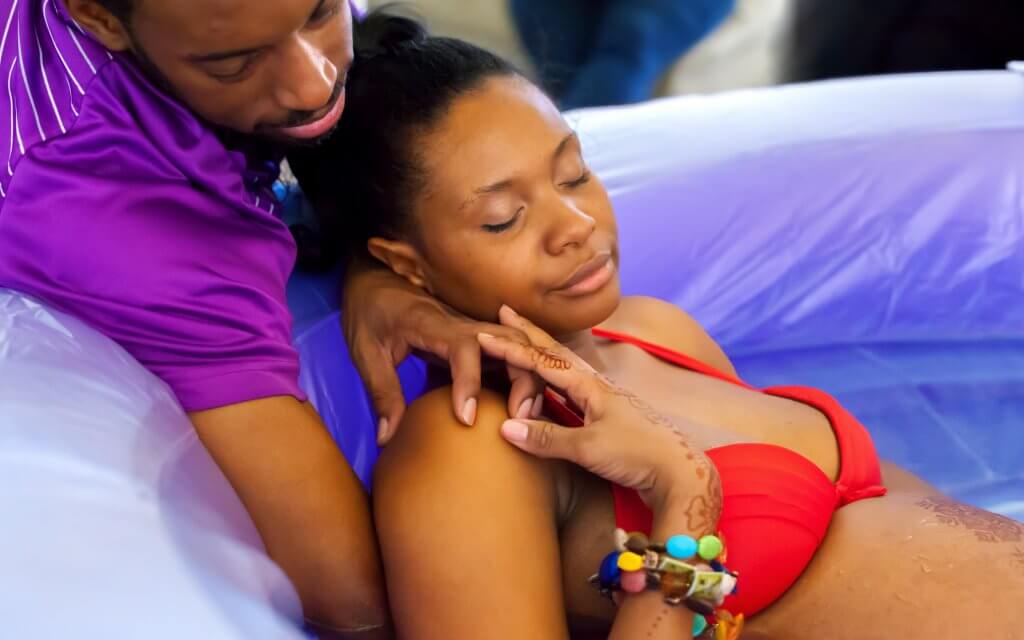
    My wife and I are a little different. We’re planning to have our child outside of a hospital in birth center an hour away.

    Not all of the 1.5% of people who have their babies outside of hospitals actually chose to have their babies there. Just ask my wife. Her grandmother delivered her in the car while her mom was on the way to the hospital!

    That story, and a pretty persuasive documentary on Netflix, convinced us to join the tiny fraction of Americans who plan to have a natural, non-hospital child birth. I admit, it freaks me out, but it really shouldn’t.

    Here’s why it freaks me out.

    Natural births are rare in America. I already mentioned that less than 2% of American births happen outside of a hospital, but did I mention that it gets worse for people in Illinois?

    I couldn’t help but scour some data and figure out where natural births were the most common. You might be surprised by the leaders and laggards. At the top of the list are states like Vermont (2.5% at-home births), Montana (2.3%), and Idaho (2.2%). At the bottom of the list are states like Alabama, Louisiana, and Nebraska (all with 0.3% at-home births).

    Guess where Illinois ranks? Near the bottom with 0.5% of births occurring at home.

    That freaks me out because, outside of two birthing centers in the entire state, at-home births are illegal in the land of Lincoln. And of course neither of those birthing centers is located in our current city (Chambana).

    I’m nervous our little bundle of joy may be discriminated against by hospitals when we tell them that our child was born “dirty” (outside of a hospital).

    Why it shouldn’t freak me out.

    At-home births are natural. Procreation is one of the most natural things that we humans still do. I mean, we’ve literally been doing it since we got here.

    I don’t know what shifted in our society that got us thinking that lab-designed, factory-manufactured products and services were better than all-natural, untampered ones, but it just doesn’t seem appropriate when giving birth.

    I think there is a lot to learn and appreciate by witnessing natural birth and even death. Both of these natural life occurrences have been ushered behind closed doors so that society at-large doesn’t have to face them on a regular basis.

    Maybe removing birth and death from the home has helped our society advance and I’m making something out of nothing. Or maybe removing them from our homes removes us from a deeper connection with humanity.

    Who knows. Either way, all prayers and positive vibes are welcomed as we embark on this new journey in parenthood.

  • When Marketing to Millennials, Don’t Forget to Ad-lib

    When Marketing to Millennials, Don’t Forget to Ad-lib

    One of my favorite podcasts asked, “If your life’s on the line, someone has a gun to your head, and you have to rap one song front to back without f*cking up, what’s that song?” (around 59:23)

    It got me thinking about how the songs would differ across age groups (e.g., millennials vs. baby boomers) and naturally, it also got me thinking about marketing.

    One of the generational distinctions that stuck with me is that, on average, I’d argue the songs that Millennials choose to save their lives would have way more ad-libs than those from their older counterparts…and the ad-libs would be crucial to saving their lives.

    Don’t you want your brand in your consumers’ consideration set when their lives (read: needs) are on the line?

    Strategically integrating ad-libs into your marketing campaign can make your brand more memorable and increase your impact if we take a deeper look into how rappers have used ad-libs to brand themselves in a crowded music scene.

    Unique + Social

    Ad-libs can attract new customers to your brand because they express uniqueness and ease social interaction. Let‘s look to rappers.

    Rapper ad-libs that have the most traction with listeners are those that either emphasize something unique about the artist (think: Gucci Mane’s “brrr!” or French Montana’s “haaanh”), or are distinct from other artists’ ad-libs (think: Pusha T’s “yuck” or Chance the Rapper’s “igh!”).

    Something magical happens when an artist (and your brand) shares this unique element with the audience through ad-lib: nearly everyone keys in on that part of the song (or campaign) and that ends up being the most memorable! After all, who can resist:

    via GIPHY

    In this way, ad-libs help your brand use an adaption of call and response that is bound to engage your audience.

    Scheduled Spontaneity

    Ad-libs are unplanned utterances by definition, but don’t let that fool you. Artists (and marketers) may come up with ad-libs spontaneously in the studio (or branding meetings), but their placement is anything but unplanned.

    With rappers, ad-libs connect bars together. They either complement a bar that precedes it or sets up a bar that follows. Your branding ad-libs can take the same approach.

    Think about what you can offer or communicate around a regularly scheduled offering that can enhance consumers’ experience with your brand. Remember GOOD Fridays before Kanye dropped his best album (according to Complex), My Beautiful Dark Twisted Fantasy?

    Source: genius.com

    Here, Kanye released seemingly random songs on a predictable schedule. Some of them would be included in the upcoming album (e.g., Monster), but some of them were just gifts to the culture (e.g., Take One For the Team).

    Is it just appropriate for millennials?

    While writing this, I started to think ad-libs were only useful for marketing to younger demographic groups. An eye-opening article made me think differently about the millennial label, but surely, Gen Xers appreciate some spontaneity here and there. Baby Boomers can’t always be opposed to social engagement. After all, this happened:

    via GIPHY

    You can bet that the lady waving the American flag won’t ever forget this day.