Category: Cool Stuff

  • How to Start a Subscription Box Business

    How to Start a Subscription Box Business

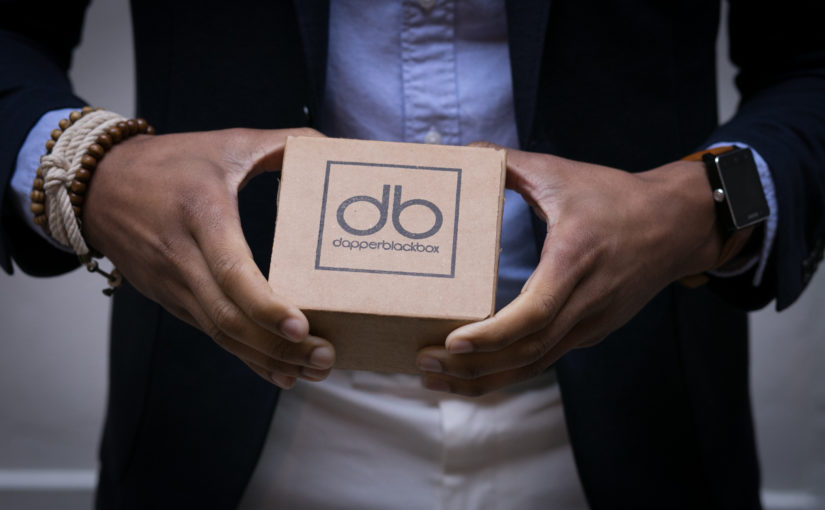
    For the past year, my subscription box business, Dapper Black Box, has been a great creative outlet for me to satiate my entrepreneurial urges, support a cause I care about, and generate some residual income while I pursue my doctoral degree.

    This post is meant to provide some general guidelines to starting a subscription box business based on my personal experience with starting one last year.

    So, here goes. I’m going to infuse stories from my personal entrepreneurial path to add some color to this list. Keep in mind, though, that your journey–should you choose to take it–will undoubtedly have its own twists and turns that make it unique. My general guidelines are meant to help you plan for some of the major hurdles that I’ve experienced.

    Click here to skip to the full list without my rambling.

    Pre-Step: Get Your Money Right

    Every business has costs. Anyone who tells you different is trying to hustle you.

    When I say “pre-step,” I mean that having your money right is something to consider before you seriously think about starting a subscription box business or any business for that matter.

    To “have your money right” means one of two things in my view:

    1. Save some of your own money over a period of time and call it your ‘personal equity in an untitled business endeavor’ and/or
    2. Have your plan in mind to raise money to fund your business endeavor.

    A good friend of mine and fellow Kelley grad always talked about new business ideas together. We joked a few times that we had laughed away many ideas that had eventually gotten XX million dollars in venture capital. One day, I had enough. I told my friend, “I’m tired of watching other people develop businesses that we came up with. The next idea that comes to mind, I’m going to just go for it.”

    One day, I had enough. I told my friend, “I’m tired of watching other people develop businesses that we came up with. The next idea that comes to mind, I’m going to just go for it.”

    Step 1: Have a Great (read: Specific) Idea

    Success in the subscription business is all about specialization. I think that people subscribe to any service because it fulfills at least one specific need. Dapper Black Box hopes to fulfill our consumers’ specific need for an easy way to support black-owned businesses. It also helps our subscribers enhance their dapper lifestyle with new accessories and personal care items every month.

    Take some time to think about your businesses mission and core goals. Try to envision who the ideal subscriber might be. For Dapper Black Box, the ideal subscriber is my brother-in-law, so I reached out to him when I was developing the idea to get a sense of what he would look for in our kind of service and why he would subscribe and stay subscribed (besides being my bro).

    Step 2: Claim Your Territory

    As soon as I brainstormed enough names and settled on one, I immediately claimed the digital real estate by purchasing a web domain and locking down all of the relevant social media handles. I wanted to make sure that my business name was distinct from other players in the landscape, so I looked into other subscription companies directed at black people and men. I noted what I liked and didn’t like to clarify my positioning in the market.

    Sidenote: I just recently protected Dapper Black Box by applying for a trademark. You may want to do that a little earlier than I did, but there are several much smarter people who can advise you on this specific topic. Just Google it.

    Step 3: Put Out Some Feelers

    As I mentioned in Step 1, I reached out to my brother for feedback because he was my target consumer. Before that, I called a few friends in the fashion industry to get a sense of whether an idea like this would be well-received. Their feedback continues to help shape Dapper Black Box into what it is today. In addition, by including the right friends and potential suppliers in my developing stages, I began building a foundation of future supporters to help spread the word.

    I also used this time to build a presence on social media platforms. Instagram is my favorite, so I spent most of my time there. “Building a presence” for me meant posting, following, liking, and commenting on posts that were consistent with my mission. I wanted to be recognized by others who were also a part of the collective economics conversation.

    Step 4: Make It Official

    Set a launch date and make a plan to achieve it. For Dapper Black Box, it was many months from when the idea first formed.

    It made sense for DBB to form an LLC and file EIN paperwork. Your business will likely have similar formation needs. Check out your local secretary of state for pricing. I formed my LLC in Indiana because it was cheaper and I have access to a home address.

    Step 5: Plan Ahead

    You want to make sure that your business has at least a few months of suppliers lined up. Don’t put off coordinating your curations until the last minute. Your suppliers and your customers will thank you. With Dapper Black Box, I planned out the first 6 months of suppliers and when I would reach out to them because I had a lot of other things going (e.g., wedding, honeymoon, 2nd year in the Ph.D. program). It helped relieve my stress and keep the early hurdles relatively low.

    Step 6: Collect and Reinvest

    I think one of the smartest ways to fund your subscription box is to solicit pre-subscriptions. It’s a simple idea really. Ask your most loyal followers to sign up for the inaugural subscription box by a pre-determined cutoff date. Use your social media accounts to drum up some drama building up to your date and allow the rest to fall into place. Make sure your website has been pretested so that there aren’t any hiccups for your first (and likely, longest) subscribers. to build cash reserves and initial purchase quantity. Made a cut off date to build a sense of scarcity.

    Pre-subscribers are great because if you’re disciplined, you can use the upfront cash to fund nearly your entire operation for the first few months. In our case, we used the pre-subscribers’ money to purchase the first month’s items and shipment supplies.

    Step 7: Continue to Innovate

    I know it’s easy to think that the hard work you did in Step 1 was innovative enough. In the words of the poet, Khaled Mohammed Khaled, “Don’t play yourself.” Try not to stagnate your own progress by getting complacent. This has been my personal challenge area.

    Continuing to innovate has been my personal challenge area.

    The doctoral program provides a great excuse, but my business and its subscribers don’t care about that. Your subscribers won’t care about your excuses either. Take some time throughout your process to think of new ways to wow your subscribers and grow your business. I’ll let you know when I come up with a good way to do that with regularity.

    Executive Summary

    Pre-step. Get your money right

    1. Have a Great (read: Specific) Idea
    2. Claim Your Territory
    3. Put Out Some Feelers
    4. Make It Official
    5. Plan Ahead
    6. Collect and Reinvest
    7. Continue to Innovate
  • What I Learned From My Vacaciones en Cuba

    What I Learned From My Vacaciones en Cuba

    Last week I had the distinct privilege to spend my vacation in Havana, Cuba. My wife and I celebrated our 1st year of marriage with my sister and some of her friends in the formerly-forbidden country not 100 miles from US shores.

    There WAS a such thing as a second world country

    Have you ever wondered where the classification of 1st and 3rd world countries came from? What about the rarely-mentioned second world countries? While in the country, a guide told us that Cuba was a third world country because they do not have the economic development and access to amenities that we’re used to in the United States. However, there used to be a different meaning for 1st, 2nd, and 3rd world countries that spawns from the Cold War era. As it turns out, Cuba would have actually been considered a second world country based upon that historical backdrop.

    Brands are just as powerful in 2nd world countries

    When purchasing Cuban cigars, I, like most Americans according to the cashier, showed favorability to the Cohiba branded items. I felt the flush in my cheeks from embarrassment when she revealed that there was really no difference between the Cuban brands.

    She said that there was definitely a difference between Cuban and American tobacco (due to the soil and climate), but Cohiba and Monte Cristo, for example, were pretty much the same.

    Our countries are strikingly similar

    For starters, we both operate in a trade deficit, wealth is unevenly distributed between the wealth and poor classes, the voting system is hierarchical, government can get in the way of small businesses success, the media is controlled by a select few, and the link between education and employment is imperfect. Yes, from my view, it is better to live here in the U.S., but it is not an open and shut case that Cubans have it all wrong and Americans have it all right.

    You don’t need to bring your own seasonings for food

    Havana is a beautiful country filled with rich history, charming people, and the best of the world’s vices. Contrary to semi-popular belief, we ate delicious, well-seasoned meals everyday we were in Havana. It’s important to note that we traveled with a group that was catered to the entire trip, so it is possible that the restaurants pulled all of the stops to make sure we were appeased.

    Cuba. 🇨🇺

    A photo posted by aaronjbarnes (@aaronjbarnes_) on

  • 3 Key Themes from Ta-Nehisi Coates’ “Between the World and Me”

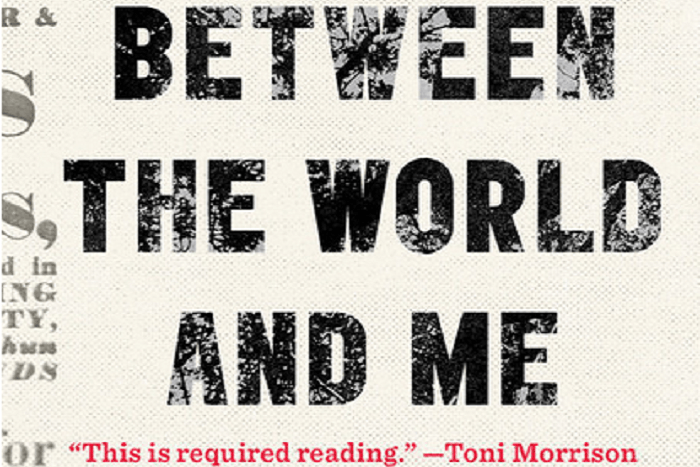
    3 Key Themes from Ta-Nehisi Coates’ “Between the World and Me”

    Every now and then, an author emerges as one of the voices of a generation. It’s my personal opinion that Ta-Nehisi Coates is one of our voices. As a national correspondent for the Atlantic, Coates regularly probes issues regarding cultural, social, and political issues.

    In his book, “Between the World and Me,” Coates elaborates on all three issues as the relate to the Black American male existence in an open letter to his teenage son. When I first learned that the book was a letter to Coates’ son, I thought that the ‘World’ referred to both the literal world in which Coates lives and his son.

    I felt that Coates was sharing his take of the world with his ‘world.’ Reading BTWAM in this way made the content that much more powerful. Although there are other more thorough pieces on BTWAM elsewhere on the net (here, here, or here), I thought I’d share my reactions to 3 key themes Coates employs throughout the book: the body, the dream, and the whites.  (more…)

  • Why You Should Write Every Day via Broderick Turner [AUDIO]

    Why You Should Write Every Day via Broderick Turner [AUDIO]

    Many of us have professional or personal interests that require us to generate content. Whether you’re a professor or an entrepreneur, or many other titles in between, content is likely to be the currency that sustains your livelihood.

    Writing everyday has helped clarify my thinking, hone my logical arguments, and reduce stress.

    I recognized this early on in my pursuits to professorship, and I tried to get in the daily writing habit during my days at NYU. Back then, I used a fancy web app to write every day, but I fell off after a few weeks. Listen in below to hear why I think I failed my first go ’round.

    [audio-clammr mp3=”http://www.aaronjbarnes.me/wp-content/uploads/2016/06/Why-750words-Failed.mp3″]


    Now, with only a word processor and the encouragement of my friend (and future Dr.) Broderick Turner, I’ve been writing every day for over 6 months. It has easily been one of the best decisions I have made in my professional career.

    Writing everyday has helped clarify my thinking, hone my logical arguments, and reduce the some of the stress that comes with juggling multiple projects. It would seem that the universe is reinforcing my new new habits because after starting this daily writing journey, my work has been accepted (and recognized) at competitive conferences, rewarded by funding agencies, and requested by various outlets. Of course, there could be other reasons for these blessings, but confirmation bias. 😉

    Broderick does an excellent job of summarizing why we all should write every day. Hopefully, you will read it and be inspired to start writing today…and the next day, and the next day…

  • Best U.S. Cities for Black Entrepreneurs: People vs Numbers

    Best U.S. Cities for Black Entrepreneurs: People vs Numbers

    A great historical perspective on black business in the U.S.
    A great historical perspective on black business in the U.S.

    One of the most important decisions about starting a business is deciding where to set up shop. Although many businesses, including my own, have taken to the web to forgo this decision, many businesses still need to resolve this critical issue. For black entrepreneurs, it is equally important to ensure that their business location is also amenable to their lifestyle as African Americans. By this, I mean that the concerns of racial prejudice and discrimination often loom large in the minds of black entrepreneurs. These issues can not only affect their businesses, but their entire way of life.

    Given this dilemma, where is the best place for black entrepreneurs to start a business?

    If you type that question into google, 10+ pages of results emerge, each with different results. As a scholar, I’ve been trained to seek out several sources to build an argument, so I looked at many of the search results to see where the similarities and differences arose.

    Three of the most prominent and cited databases were from of Thumbtack, Nerd Wallet, and Good Call. Maybe unsurprisingly, there was little agreement on the top 10 cities for black entrepreneurs in 2015 among these outlets.  Only one metropolitan area made the top 10 list on each database: Raleigh-Durham, NC.

    Raleigh1

    Without a doubt, the differences in the methods used to calculate the top 10 lists is what created the incongruity among the databases. One major difference in the methods is the reliance on primary vs. secondary data. Primary data is usually collected by the researcher for a specific purpose; examples include surveys, interviews, and behavioral experiments if you really want to get fancy. Although more specific than secondary data, primary data is relatively more expensive to collect. Secondary data, on the other hand, is usually collected by a third party and tends to be more general. Big data usually falls under the category of secondary data.

    My personal research tends to use primary research because I like to hear from and observe actual people and draw my inferences from their stories/behaviors. It was interesting that of the three major databases, only Thumbtack used primary data to generate their list. They surveyed over 1,600 actual black entrepreneurs across the U.S. and used their insights to create their top 10 cities.

    Yes, big data similar to the data used by Nerd Wallet and Good Call can give us access to larger pools of information that are extremely useful, but sometimes I wonder if we might lose some of the insight that we can learn from talking to people at the heart of the issues we study. Really expert researchers bring together a mix of primary and secondary data to generate impactful insights with wide applicability. Maybe someone will read this post and be inspired to use mixed methods to make the 2016 list of the best cities for black entrepreneurs.

    Did your city make the list on either database? Click the links below to find out!

    Thumbtack | Nerd Wallet | Good Call | Google search