Tag: Consumer Engagement

  • When Marketing to Millennials, Don’t Forget to Ad-lib

    When Marketing to Millennials, Don’t Forget to Ad-lib

    One of my favorite podcasts asked, “If your life’s on the line, someone has a gun to your head, and you have to rap one song front to back without f*cking up, what’s that song?” (around 59:23)

    It got me thinking about how the songs would differ across age groups (e.g., millennials vs. baby boomers) and naturally, it also got me thinking about marketing.

    One of the generational distinctions that stuck with me is that, on average, I’d argue the songs that Millennials choose to save their lives would have way more ad-libs than those from their older counterparts…and the ad-libs would be crucial to saving their lives.

    Don’t you want your brand in your consumers’ consideration set when their lives (read: needs) are on the line?

    Strategically integrating ad-libs into your marketing campaign can make your brand more memorable and increase your impact if we take a deeper look into how rappers have used ad-libs to brand themselves in a crowded music scene.

    Unique + Social

    Ad-libs can attract new customers to your brand because they express uniqueness and ease social interaction. Let‘s look to rappers.

    Rapper ad-libs that have the most traction with listeners are those that either emphasize something unique about the artist (think: Gucci Mane’s “brrr!” or French Montana’s “haaanh”), or are distinct from other artists’ ad-libs (think: Pusha T’s “yuck” or Chance the Rapper’s “igh!”).

    Something magical happens when an artist (and your brand) shares this unique element with the audience through ad-lib: nearly everyone keys in on that part of the song (or campaign) and that ends up being the most memorable! After all, who can resist:

    via GIPHY

    In this way, ad-libs help your brand use an adaption of call and response that is bound to engage your audience.

    Scheduled Spontaneity

    Ad-libs are unplanned utterances by definition, but don’t let that fool you. Artists (and marketers) may come up with ad-libs spontaneously in the studio (or branding meetings), but their placement is anything but unplanned.

    With rappers, ad-libs connect bars together. They either complement a bar that precedes it or sets up a bar that follows. Your branding ad-libs can take the same approach.

    Think about what you can offer or communicate around a regularly scheduled offering that can enhance consumers’ experience with your brand. Remember GOOD Fridays before Kanye dropped his best album (according to Complex), My Beautiful Dark Twisted Fantasy?
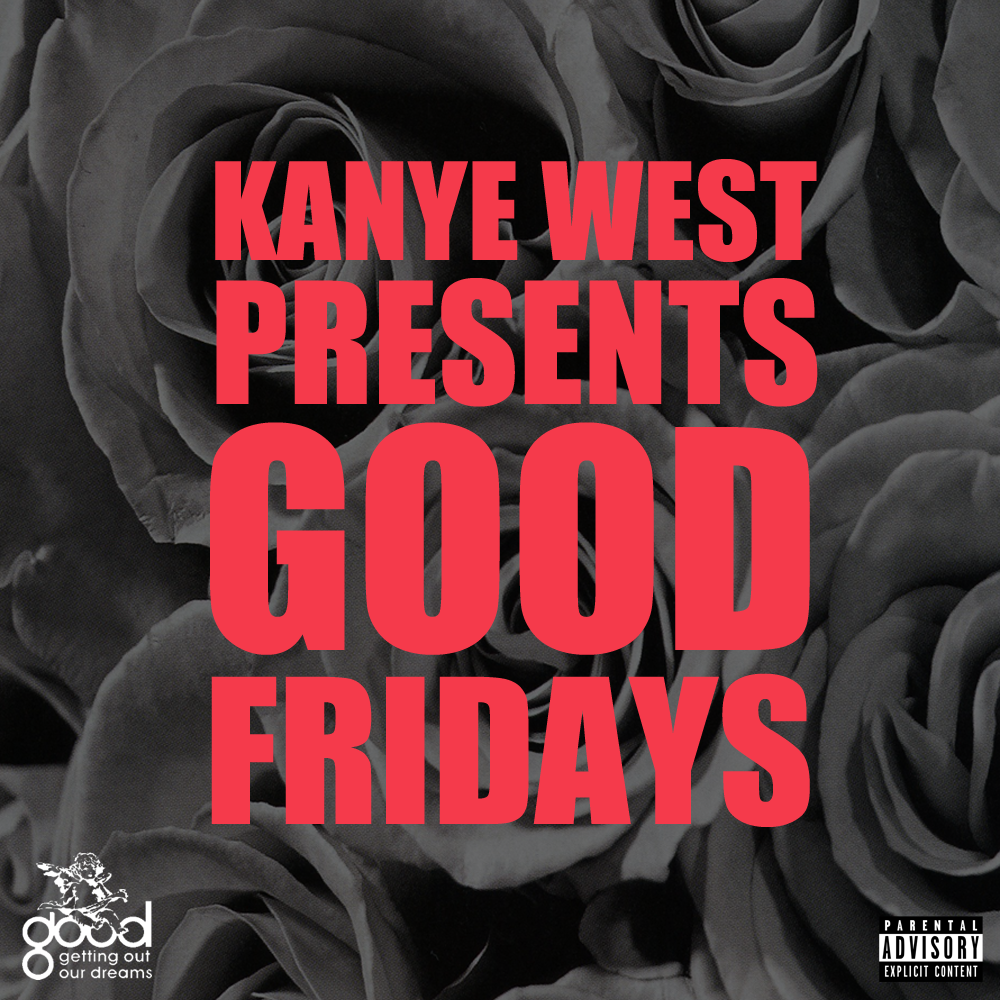
    Source: genius.com

    Here, Kanye released seemingly random songs on a predictable schedule. Some of them would be included in the upcoming album (e.g., Monster), but some of them were just gifts to the culture (e.g., Take One For the Team).

    Is it just appropriate for millennials?

    While writing this, I started to think ad-libs were only useful for marketing to younger demographic groups. An eye-opening article made me think differently about the millennial label, but surely, Gen Xers appreciate some spontaneity here and there. Baby Boomers can’t always be opposed to social engagement. After all, this happened:

    via GIPHY

    You can bet that the lady waving the American flag won’t ever forget this day.

  • The Bigger Picture Series [VIDEO]

    The Bigger Picture Series [VIDEO]

    I’ll get right to the chase. I’m using my subscription business to gain experience in front of the camera. Videos are a popular way to engage consumers and strengthen brand concepts. In addition, I will undoubtedly use video as a way to engage my “consumers” in the classroom.


    My plan is to use The Bigger Picture series to increase the associations between Dapper Black Box and ideas such as entrepreneurship, innovation, and sustainability.

    Check out the first video below and be critical!

  • Consumer Behavior Trends: Mobile Payments are the Wave [Infographic]

    Consumer Behavior Trends: Mobile Payments are the Wave [Infographic]

    In light of Paypal’s most recent update that allows customers to make purchases from thousands of merchants using your online Paypal balance, I decided to look further into what’s going on in this mobile space. It’s incredibly fascinating…and utterly terrifying. I found this infographic to help explain what’s going on in the area.

    The most important mobile payment infographic. Ever.

    The most important mobile payment infographic. Ever.

    On one hand, paying for goods/services with mobile devices is technologically forward.

    Mercator Advisory Group just released a study explaining how minorities and adults are leading the way with mobile payment use.

    This makes sense.

    What makes this finding interesting is that these two populations loosely define the Millennial generation–the future of this country’s consumer base. millennials 2This means that researchers like me will be interested in investigating what elements are at play when/if they decide how they interact with mobile environments. Wish me luck, lol.


    The Federal Reserve Bank of Boston confirms this research area by reporting that consumers almost never switch their payment type over time. This means that if minorities and young adults latch on to mobile payments like the above report suggests, then they will be pretty loyal to this method into old age. (Think about all the seniors you’ve stood behind in the grocery store who still pay with check!)

    On the other hand, what about all of the consumer data that businesses will be able to collect?

    Big-Brother-is-Watching

    We’re already concerned with the data that Facebook has on us and they’re getting into the mobile payments business as well. Think about how much more poignant the information Paypal will be able to analyze as they suggest nearby businesses that accept Paypal payments that are within a quarter mile of your workplace.

    1. They’ll know where you spend a lot of your time.
    2. They’ll have loads of information about your purchase preferences
    3. Who knows what else they’ll know…

    One company found that their customers were largely resistant to mobile payments perhaps for that very reason. I think that mobile payments will take over the majority of daily purchases. Like most revolutionary ideas, it’s scary at first. Decades from now, we’ll wonder how we ever got along without them.

    What do you think? Do you use mobile payments already? What do you think of them? Discuss in the comments.

  • Marketing Monitor: Tumi Uses B-List Celebrities to Identify with Target Market

    Marketing Monitor: Tumi Uses B-List Celebrities to Identify with Target Market

    Stuart Elliot of the New York Times recently wrote about how Tumi Holdings is challenging the luxury luggage industry’s common marketing practice of using the most recognizable celebrities as brand endorsers.

    I had never heard of Tumi before this article (why would I? I’m not a high-class world-traveler…yet), but I have definitely heard of some of the company’s celebrity-laden competition. Huge, world players such as Coach, Louis Vuitton, and Samsonite occupy this space and most of them use well known celebrities to communicate their brand’s exclusivity and luxuriousness.

    Tumi, however, is taking a much more interesting approach at this. They’re challenging whether or not their target audience, or “global citizens” as Tumi describes them, identify more with mega-stardom or more attainable success within specific industries.

    Tumi3

    I imagine that Tumi’s hope is that their “global citizen” target customer who views their advertisements would ask himself, “What makes them famous?” and reason, “I have a moment. Let me Google them.” Upon doing so, they’d find out that Novak Djokovic, one of Tumi’s B-list celebrity endorsers, is ranked world no. 1 by the Association of Tennis Professionals. Of course the ideal scenario is that the customer gets lost in google’s labyrinth of information and somehow connects all of that time and energy spent back to Tumi–that’s the kind brand engagement that companies dream of.

    Agent Obvious asks, “What if the target customer dismisses the B-list endorser turns to the Angelina Jolie Louis Vuitton advertisement out of sheer face-recognition?”

    I think that is a risk Tumi is willing to take. They are already miles behind industry leaders in terms of market share and revenue, so I’d say that they’re looking for any way to differentiate themselves from the market leaders and establish a deeper psychological connection with their consumers.

    They’re hoping that consumers believe it easier to achieve success as a business executive of a Fortune 500 company, like Tumi endorser Paolo Ferrari of Pirelli, than it is to become a movie or pop-star. If Tumi can position themselves closer to where their target consumers envision themselves, it might spell success for the 28-year old firm.

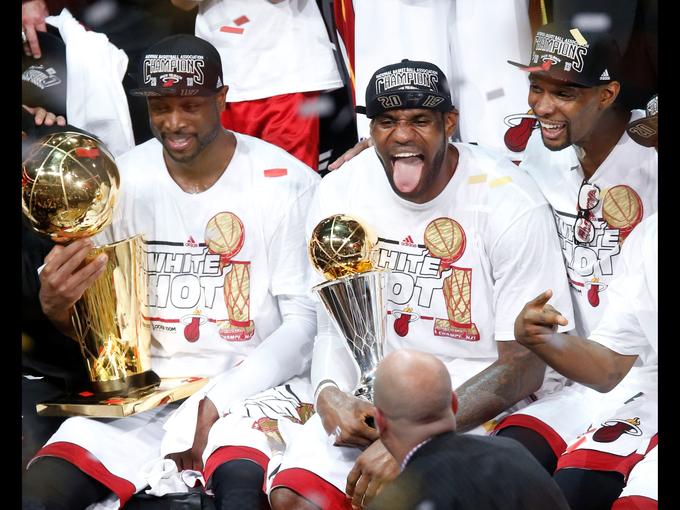
    1371796364000-USP-NBA-Finals-San-Antonio-Spurs-at-Miami-Heat-051-1306210245_4_3It would be equivalent to Reebok partnering with a college basketball star who didn’t get drafted to the NBA, but accomplished notable professional feats and retained his basketball skills well enough to lead his local intramural team to a championship.

    I plan on following Tumi for a few quarters to see if their new ad campaign has any traction and raises their quarterly performance. What do you think of their strategy? Comment below!

  • Microsoft Is Smarter Than It Looks: XBOX ONE

    Microsoft Is Smarter Than It Looks: XBOX ONE

    Lately, it seems like Microsoft always comes up a little short. The company has suffered several embarrassing failures in different markets. Internet Explorer, Zune, and Bing are just a few. I’m sure there are several ways that each of these efforts can be dissected to show why they’ve come up short in their respective markets.

    Bill Gates

    However, I believe that at the heart of each product’s failure, is Microsoft’s inability to accurately understand its customer. Microsoft Office and Explorer shared similar initial successes because of their early entry into their markets. The Zune and Bing, however, were late entrants that did not achieve enough significant differentiation from the current competitors. Furthermore, none of those products really captured the majority of consumers’ interests and preferences.

    Microsoft’s shining beacon that seems to have “got it right” is their popular game console, the XBOX. The Xbox entered the market later than its competitors but gathered enough interest AND adapted well enough to survive and even thrive in the gaming industry.

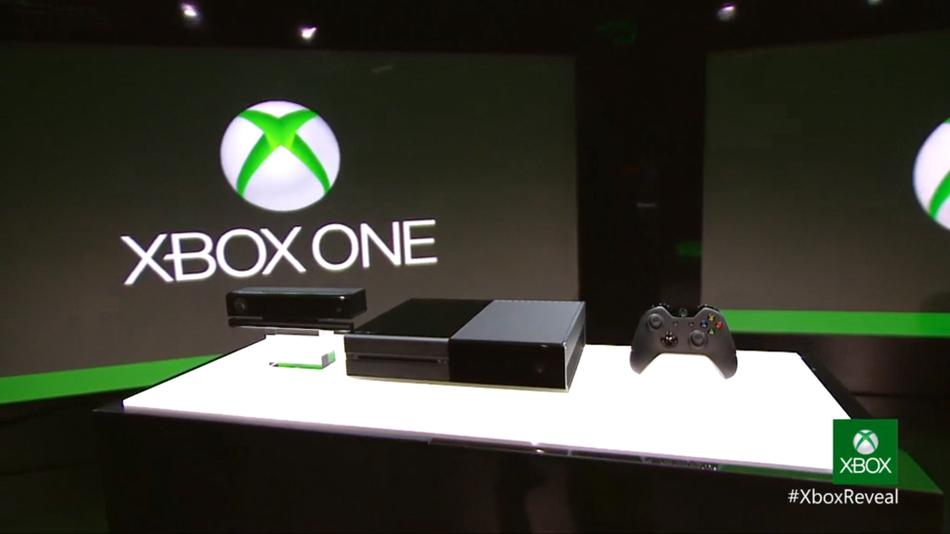
    Recently, The New York Times recently released an article explaining how Xbox planned to further engage its consumers and attract more business.

    Through strategic brand extensions, I see Xbox’s effort to increase their brand’s perception as the premiere alternative for interactive entertainment, but also extend their relationship with their consumers beyond just gaming.

    Xbox_live

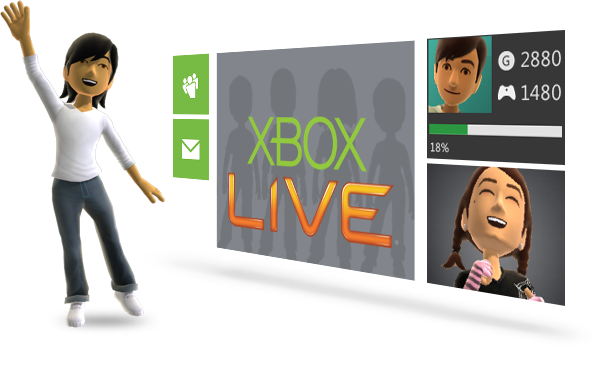
    You’ll remember that Xbox is the brand that brought competitive gaming between distant participants from computers to consoles with the ingenious, “Xbox Live.” This fit perfectly as a complement into Aaker and Keller’s (1990) discovery of  three bases in which consumers categorize and evaluate brand extensions. The new extension of the brand must either “fit” into the consumer’s idea of the brand as a:

    1. Complement,
    2. Substitute, or
    3. Transfer

    Yet again, Microsoft is taking interaction to another level. I think they have wisely decided to create a live-action television series (with director Steven Speilberg!) modeled after their cash cow, Halo. This makes total sense as a brand extension because it has an immediate connection to a current brand winner and has the potential to drive even more interaction with the brand. Furthermore, no other game system currently occupies this space successfully. Xbox has the opportunity to define this sector in a similar way that they did with Xbox Live.

    I see where Xbox strategists are trying to draw the linkage between their second extension, a smartphone app in partnership with the NFL that allows users to interact with their fantasy league teams as they watch the game, but I think ESPN already provides significant competition in this space. They will need to really make their offer to their consumers extremely salient and prove that their mobile app is the method for real gamers to interact with their fantasy football leagues.

    The following video alludes to the XBOX ONE’s new features while heralding the brands previous accomplishments and almost makes me want to become a gamer again. Enjoy.