This work represented an ongoing investigation into the psychological consequences of participation in cause marketing. Cause marketing is the type of campaign that links the consumer’s purchase with the firm’s donation to a social cause. We build upon prior literature that suggests that virtuous behavior leads to indulgent behavior and argue that by emphasizing free choice, virtuous choice can actually restrict indulgent behavior.
Tag: Consumer Psychology
-
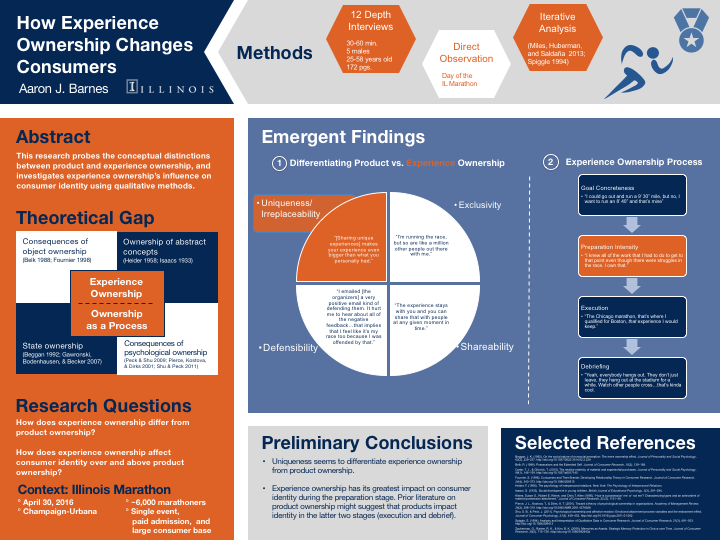
How Experience Ownership Changes Consumers – Poster Presented at SCP Boutique Conference on Consumption and Identity
I ask the simple question, “How do consumers own experiences?” As consumers, especially millennials, seek out experiential vs. material consumption, it seemed important to ask whether consumers even felt ownership of the experiences they consumed. If consumers do feel a sense of ownership over their experiences, how does experience ownership differ from product ownership? Although this work developed out of a need to pre-test a stimulus in another project where I assume that students could own their collegiate experience, my qualitative research methods seminar gave me the tools to investigate this question with rigor.
Click to download poster [btnsx id=”414″]
-
The Psychology Behind Luxury at the Airport [AUDIO]
I’m trying something new with these audio recordings to supplement my blog posts. Maybe the pattern will catch on. Stay tuned and let me know what you think!
For this week’s piece, I invited my wife and travel consultant extraordinaire, Lauren-Ashley to offer some practitioner insight to my initial thoughts about luxury brands at the airport.
LISTEN IN:
[audio-clammr mp3=”http://www.aaronjbarnes.me/wp-content/uploads/2016/05/Luxury-at-the-Aiprot.mp3″] -
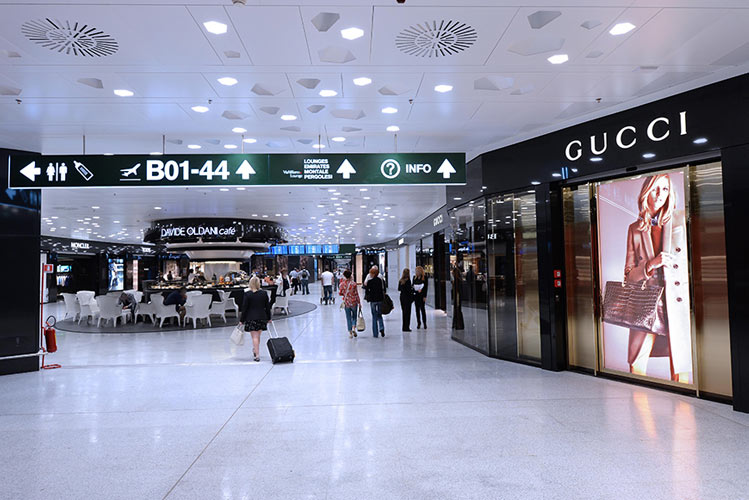
The Psychology Behind Buying Luxury at the Airport
Listen in:
[audio-clammr mp3=”http://www.aaronjbarnes.me/wp-content/uploads/2016/05/Luxury-at-the-Aiprot.mp3″]Each year consumers spend billions of dollars on luxury products—relatively expensive products that provide increased prestige without providing additional utilitarian value. If you’ve been on a trip out of the country or at least flown in an international airport, you probably have noticed the increase in luxury retailers in the shopping area.
Several airports around the world have recently begun to seek out luxury retailers to include in their international terminals, including San Francisco, London, Hamad in Qatar, and Dallas/Fort Worth International. A recent post in The Guardian attributed the increase in luxury airport sales to new wealthy travelers, but I have a psychological hunch as to why luxury retailers have seen so much success at the runway.
Why would an American couple be more likely to buy a luxury bottle of wine when traveling to Iceland as opposed to Boston?
My hunch stems from the difference in brand concept between luxury and non-luxury goods. Brand concepts are just the unique associations (e.g., high status) that typically emerge from a particular combination of product features (e.g., high price, expensive-looking design, etc.) and a firm’s attempts to create meanings from these combinations (e.g., “the ultimate driving machine” by BMW).
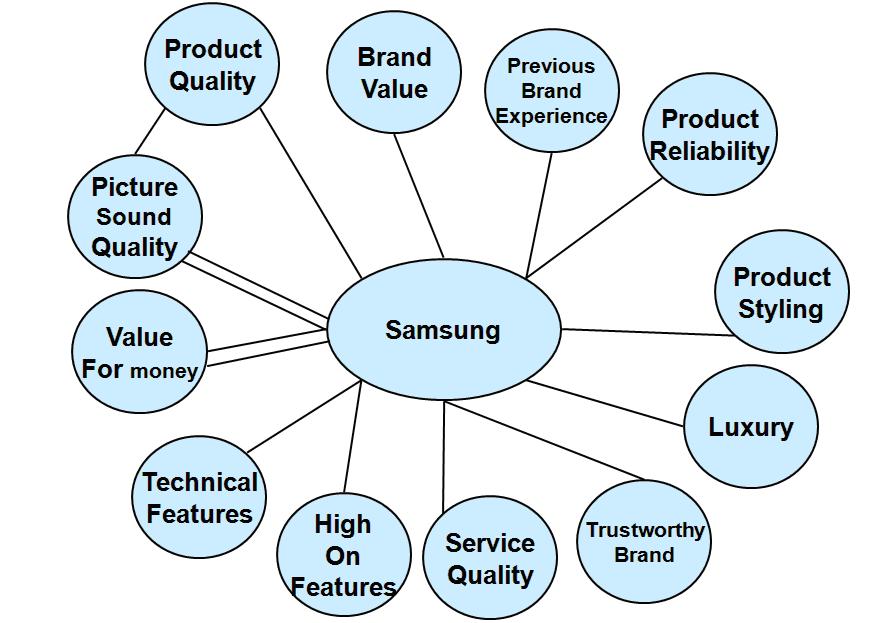
A brand concept map for Samsung Luxury goods tend to have brand concepts made up of more abstract associations than non-luxury goods. For instance, it’s more likely for consumers to think of “decadent” and “indulgent” when they see Godiva chocolate as opposed to Hershey’s.

Luxury brands’ abstract concepts allow consumers to perceive greater fit between them and brand extensions into product categories that are much different from the original product category (see Park, Milberg, and Lawson 1991). As an example, it is probably easier to image a Godiva brand of coffee than a Hershey’s brew. In other words, a luxury brand’s abstract associations allow it to transcend product categories.
When we travel across international borders, we similarly transcend cultures, timezones, and comfort zones. It’s much easier to describe an international trip in terms of its abstract associations (e.g., an opportunity to see the world) and a domestic trip in more concrete terms (e.g., to visit family). I argue that the similarity between brand concepts that transcend product categories and trips that traverse international borders increases our desire for luxury goods. This is because luxury brands benefit from the fact that consumers are literally crossing into foreign territories. This act produces a sort of fluency—or easy psychological processing—for consumers who are presented with luxury options.
Do you buy my argument? Why else do you think people might purchase more luxury goods when traveling internationally vs. domestically?
-
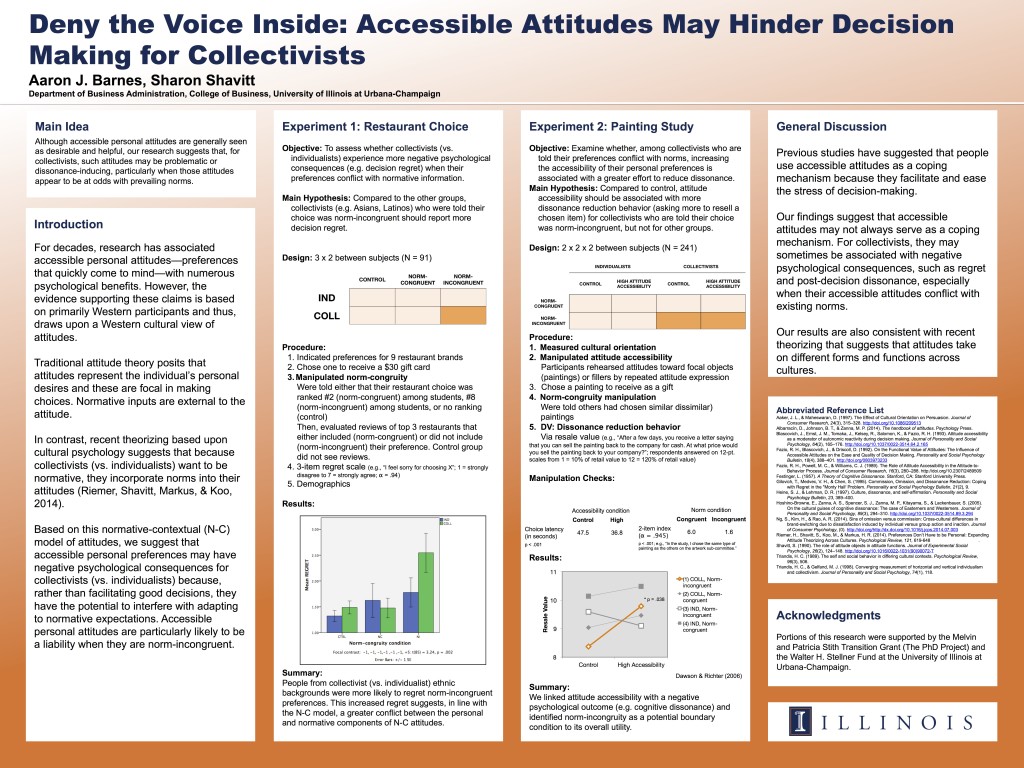
Deny the Voice Inside – Poster Presented at SPSP San Diego
What can cross-cultural research teach us about the possible consequences of preferences that readily come to mind? We investigate this question in this project titled, Deny the Voice Inside