Tag: Entrepreneurship

  • Change Recurring Billing Date in Stripe without PHP

    Change Recurring Billing Date in Stripe without PHP

    One challenge of running a subscription business is your subscribers’ payment dates. If you use Stripe to process your recurring payments and don’t know PHP, it’s almost impossible to change a subscriber’s billing date. Here’s a simple workaround to make this change without using a single line of PHP code.

    I like knowing how many people are subscribed for a given month as far in advance as possible. It’s difficult to do that when people sign up in mid-February, receive February’s subscription, and do not have to pay again until mid-March for March’s subscription. This can put you in the vulnerable position of sending products before receiving payment, leading to inconsistent cash flows and unreliable revenue projections over time. I started a subscription business precisely so that I don’t have to waste time hounding customers to pay invoices. 

    Note: You can ignore this warning if your customers never experience problems with their payment method. Life has taught me otherwise.

    Here’s how you do it.

    1. Find the subscription in your Stripe dashboard

    2. Click “Update subscription”

    3. Uncheck “Prorate changes”

    4. Delete the current subscription
    5. Click “Add a product” and choose the new subscription for your customer (for me, it’s the same subscription with the same interval and price)

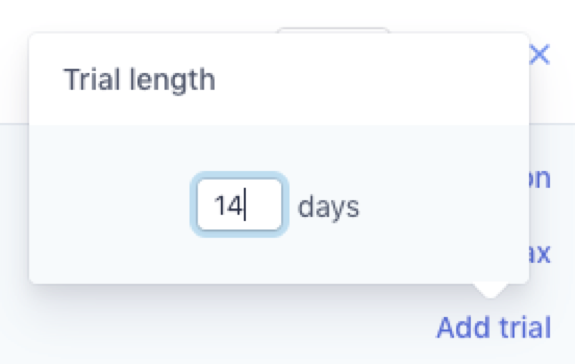
    6. Click “Add trial” and enter the number of days between the current date and the date you want their next payment to process. For instance, today is March 1. If I wanted Strip to process payment on the 15th, I would enter 14 for the trial period.
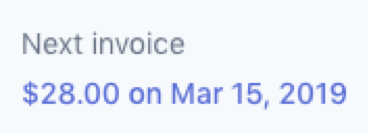
    7. Click “Update subscription” and check to make sure the next invoice will charge the correct amount on the correct date. This will be right under your customer’s name on their subscription page.
    And that’s it! Keep in mind, this method works best for customers who have already paid for the current month’s subscription. That means that it’s best to change your subscriber’s billing date shortly after payment has processed. 
  • The “Why” Inside Dapper Black Box

    The “Why” Inside Dapper Black Box

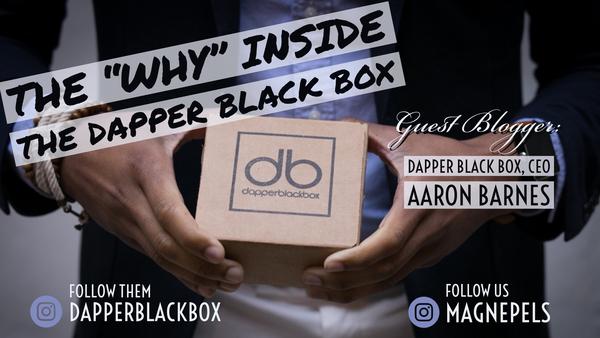
    The subscription service business platform is a growing phenomenon. It adheres to the shoppers desire of convenience and cost-efficiency. Hear from Dapper Black Box Founder, Aaron Barnes, as he breaks down the “Why” inside the box as their company also adheres to some shoppers third desire, consciousness.

    The first thing many of us do when we decide to buy black is search for black-owned directories online. Poring over google search engine pages, Facebook groups, Tumblr threads, and the like, you can come across dozens of directories without a lot of overlap.

    That’s a big problem. It’s such a big problem that I thought I wanted to fix it at first.

    Encouraging investment

    But the more I thought about what I really wanted for a business that I created, Dapper Black Box’s mission emerged. Dapper Black Box (DBB) exists to encourage investment into black-owned businesses (BOBs).

    Though business directories certainly do this, I wanted to take a more direct route.

    Championing collective energy

    One critique I have of black-owned directories was that it they make it difficult for consumers to choose between options. There are few signals to the consumer that any business is better positioned to meet his needs. At the same time, it’s in every independent business’ interest to self-promote, but when everyone is saying, “Look at me! Buy from me!” it’s hard to choose who to buy from. I thought DBB could serve as a third-party entity focused on championing the collective energy that each individual business puts out into the digital marketplace. In other words, DBB says, “Look at all of this amazing work that BOBs are doing in this space!”

    Selling an idea

    It was when I focused on the idea of encouraging investment into black businesses that creating DBB to be a subscription service began to make sense. Not only are subscription services an easy-to-manage business model for my day-career, but they are also an excellent vehicle for advancing our mission.

    Again, DBB exists to encourage investment. Using a subscription business model allows us to encourage consistent investment by recycling the recurring payments back into black-owned businesses. We go beyond pointing to worthy BOBs and make it easy to support them by curating 4–5 items from different brands each month.

    Continuing to meet our audience’s needs

    Now that we’ve sent over 2,500 subscriptions in less than 2 years, I’m convinced that we’re beginning to meet a need in the market. Our goals over the next phase of DBB’s growth are to continue to meet our target audience’s needs by expanding what it means to be dapper and celebrating blackness more generally.

    We’re addressing the first need by connecting BOBs that don’t clearly fit a traditional “dapper” definition with our partner, Impact Service Promotions (sp?). ISP is a BOB within my family in-law that helps supply businesses with thousands of promotional materials. We have partnered with ISP to supply developing BOBs with promotional materials that can help get the word out about their businesses.

    I’m especially excited about how we’re addressing the second need. DBB subscribers/followers know that we name each month’s curation after an influential black man (e.g., March’s DBB was named in honor of Clarence Avant). Up until the middle of 2016, we did not provide much information about the DBB namesake. Now, however, we’re digitally chronicling information about each DBB namesake through our YouTube series, “The Bigger Picture.”

    I’m always happy to discuss ideas about how DBB can continue to meet your needs. Please do not hesitate to contact me directly at aaron@dapperblackbox.com so we can chat!

    This article was originally published in Magnepels’ Blog on 4/6/17.

  • Why Barbers Have More Loyal Customers Than Your Startup

    Why Barbers Have More Loyal Customers Than Your Startup

    Loyal customers keep your startup afloat and propel your business to success. No one understands this better than barbers. Ask the guy next to you how many times he’s switched barbers in the last year. I’m willing to bet my savings that his number is less than 2. That’s the kind of loyalty your startup needs to grow into a sustainable business.

    Here are three tips that you can learn from barbers about garnering customer loyalty.

    Barbers are there when it counts.

    Every important life event is preceded by a visit to the barber. Preparing for your first day of school or a new job? Get a haircut. Going on a first date? Call your barber. Scheduling an important client meeting? Check your barber’s schedule first.

    Like barbers, you need to think about when your customer needs your service and position your brand to meet them at that juncture. You want to become the solution that your customers look for in their times of need.

    If you cannot think of when these needs occur, don’t be afraid to create the need. It wasn’t always an expectation to buy a diamond ring before proposing.

    Barbers change customers’ lives.

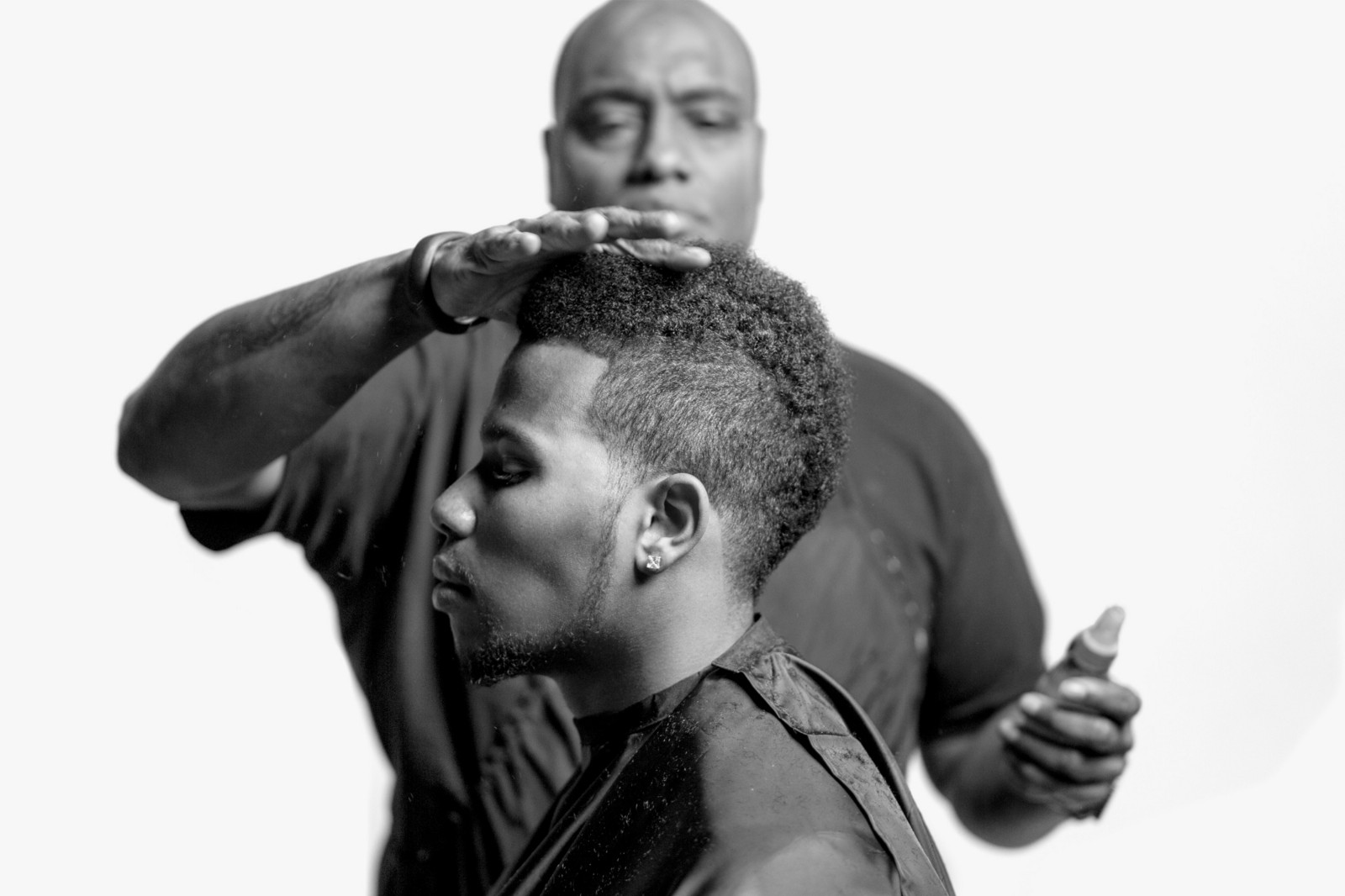
    via bevelcode.com

    Nothing is quite like getting up from the barber chair after a fresh cut. Don’t think a good haircut can change someone’s life? Try going without one for a few months and see how your life changes. Or try to imagine how different life would be for Kevin Durant if he got a decent cut.

    Jokes aside, barbers’ primary service changes their customers’ lives for the better. As a business owner, you need to ask, “How are we changing our customers’ lives for the better?” Once you’ve found the answer, ask if your customers know how much you’re improving their lives. Could they use a reminder? You bet they could.

    Barbers give away freebies.

    Yes, a beard trim or straight razor may run you a few extra dollars, but who can put a price on an engaging conversation? Your barber sure doesn’t. Freebies like this give customers extra reasons to be loyal to you and only you.

    Barbers have mastered the art of providing free services to their clients and you can too.

    1. Start with freebies that are indirectly related to your primary service. If you sell custom meal plans, think about giving away free workouts. This leaves figurative bread crumbs for your customers to grow into brand loyalists.
    2. Give freebies that matter. A barbershop conversation is more than just witty banter. It’s an oasis in the middle of a tough workweek. It’s an opportunity to open up about real (or not) issues. These conversations provide value to customers and cost nothing to the owner. What can you give that your customers would actually value?
    3. Finally, create freebie tiers. Make it so that customers can access some freebies without purchasing the focal services (e.g., the guy who comes to the barbershop just to argue the best album of 2016) Then, think about what your business can afford to give away only to loyal consumers. In both cases, they’ll appreciate the free stuff and return the favor later.

    If you act upon these tips, you’ll be three steps closer to gaining more loyal customers and driving sustainable growth for your startup.

    Think you’ve got a handle on getting loyal customers, how do you do it?

  • Best U.S. Cities for Black Entrepreneurs: People vs Numbers

    Best U.S. Cities for Black Entrepreneurs: People vs Numbers

    A great historical perspective on black business in the U.S.
    A great historical perspective on black business in the U.S.

    One of the most important decisions about starting a business is deciding where to set up shop. Although many businesses, including my own, have taken to the web to forgo this decision, many businesses still need to resolve this critical issue. For black entrepreneurs, it is equally important to ensure that their business location is also amenable to their lifestyle as African Americans. By this, I mean that the concerns of racial prejudice and discrimination often loom large in the minds of black entrepreneurs. These issues can not only affect their businesses, but their entire way of life.

    Given this dilemma, where is the best place for black entrepreneurs to start a business?

    If you type that question into google, 10+ pages of results emerge, each with different results. As a scholar, I’ve been trained to seek out several sources to build an argument, so I looked at many of the search results to see where the similarities and differences arose.

    Three of the most prominent and cited databases were from of Thumbtack, Nerd Wallet, and Good Call. Maybe unsurprisingly, there was little agreement on the top 10 cities for black entrepreneurs in 2015 among these outlets.  Only one metropolitan area made the top 10 list on each database: Raleigh-Durham, NC.

    Raleigh1

    Without a doubt, the differences in the methods used to calculate the top 10 lists is what created the incongruity among the databases. One major difference in the methods is the reliance on primary vs. secondary data. Primary data is usually collected by the researcher for a specific purpose; examples include surveys, interviews, and behavioral experiments if you really want to get fancy. Although more specific than secondary data, primary data is relatively more expensive to collect. Secondary data, on the other hand, is usually collected by a third party and tends to be more general. Big data usually falls under the category of secondary data.

    My personal research tends to use primary research because I like to hear from and observe actual people and draw my inferences from their stories/behaviors. It was interesting that of the three major databases, only Thumbtack used primary data to generate their list. They surveyed over 1,600 actual black entrepreneurs across the U.S. and used their insights to create their top 10 cities.

    Yes, big data similar to the data used by Nerd Wallet and Good Call can give us access to larger pools of information that are extremely useful, but sometimes I wonder if we might lose some of the insight that we can learn from talking to people at the heart of the issues we study. Really expert researchers bring together a mix of primary and secondary data to generate impactful insights with wide applicability. Maybe someone will read this post and be inspired to use mixed methods to make the 2016 list of the best cities for black entrepreneurs.

    Did your city make the list on either database? Click the links below to find out!

    Thumbtack | Nerd Wallet | Good Call | Google search