Author: aaronjbarnes

  • Why I Can’t Study Race Related Consumer Issues

    Why I Can’t Study Race Related Consumer Issues

    I spent a short amount of time (9 days, 3,000+ words) researching consumer issues related to the recent killings of black Americans at the hands of law enforcement. It was my way of redirecting some of the hurt and anger I was feeling into something constructive. Since then, I’ve stopped pursuing that idea and I don’t think I will pick it—or ideas like it—up again.

    There are many elements that comprise earnest scientific pursuit. Two of the most important are bias and feedback. Both of these are problematic as it pertains to my study of race-related consumer issues.

    It is best to check your biases and lenses at the door. Carrying and ignoring a bias can lead to frustration, misinterpretation, and ultimately, waste your time. Bias is such an enemy to science that research methods are constantly improving in an attempt to account for, control, or remove it from scientific inquiry.

    One of my greatest biases is related to blackness. My life’s journey would have been completely different had I been born a different skin color. My blackness has colored each and every life event. Some could say that every failure and every success has been because of or in spite of my blackness. I’m not writing today to debate that.
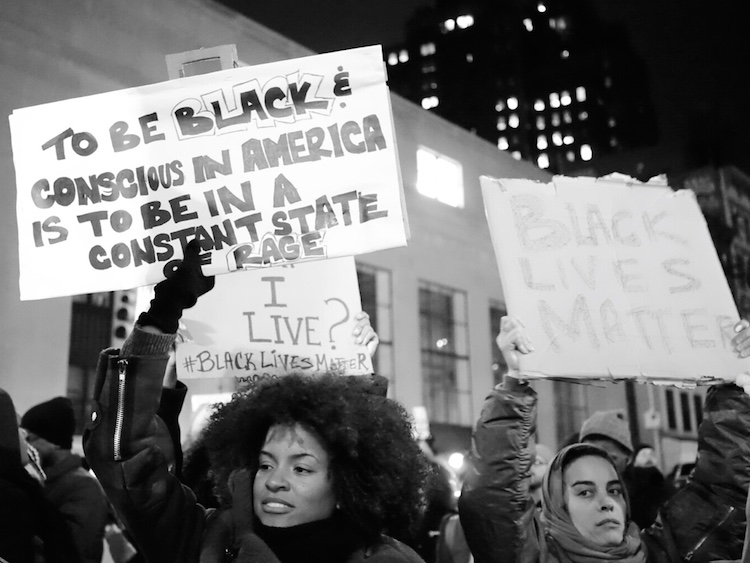
    black-america

    Feedback is critical to scientific progression. Criticism from various audiences helps our work tremendously. Without it, the research that we publish would not be as refined nor as impactful as it could be. I am still learning to appreciate the value of feedback from colleagues because it can be difficult to face criticism when you have invested so much into your work.

    However, the recent murders of two black citizens and 5 police officers confirmed that studying race related consumer issues would be too difficult for me. I would struggle to remove my emotional bias and inherent personal conflict from the scientific inquiry. I would also struggle to deal with criticism about the work because of my emotional attachment to it.

    Granted, I have biases and emotional attachment to my current projects, but my biases and attachment to research related to race issues would be much stronger. Yes, I am sensitive to criticism now, but I am also able to face that sensitivity and appreciate the feedback that I receive. Yet, as long as black bodies continue to be killed without punishment, I doubt that I would be so appreciative of feedback that challenges any element of my race-related research.

    Just look at how ABC News responds to the President of the United States’ live reaction to recent events.

    I will do something, though. Part of what I am already doing manifests itself in my subscription business, Dapper Black Box. I believe that collective economics is an excellent tool to improve the well-being of black Americans. Admittedly, it is not an immediate solution nor is it specific to the issue of police brutality. Help me find a useful way to redirect my frustration and energy for something that can improve this serious problem.
     

  • What I Learned From My Vacaciones en Cuba

    What I Learned From My Vacaciones en Cuba

    Last week I had the distinct privilege to spend my vacation in Havana, Cuba. My wife and I celebrated our 1st year of marriage with my sister and some of her friends in the formerly-forbidden country not 100 miles from US shores.

    There WAS a such thing as a second world country

    Have you ever wondered where the classification of 1st and 3rd world countries came from? What about the rarely-mentioned second world countries? While in the country, a guide told us that Cuba was a third world country because they do not have the economic development and access to amenities that we’re used to in the United States. However, there used to be a different meaning for 1st, 2nd, and 3rd world countries that spawns from the Cold War era. As it turns out, Cuba would have actually been considered a second world country based upon that historical backdrop.

    Brands are just as powerful in 2nd world countries

    When purchasing Cuban cigars, I, like most Americans according to the cashier, showed favorability to the Cohiba branded items. I felt the flush in my cheeks from embarrassment when she revealed that there was really no difference between the Cuban brands.

    She said that there was definitely a difference between Cuban and American tobacco (due to the soil and climate), but Cohiba and Monte Cristo, for example, were pretty much the same.

    Our countries are strikingly similar

    For starters, we both operate in a trade deficit, wealth is unevenly distributed between the wealth and poor classes, the voting system is hierarchical, government can get in the way of small businesses success, the media is controlled by a select few, and the link between education and employment is imperfect. Yes, from my view, it is better to live here in the U.S., but it is not an open and shut case that Cubans have it all wrong and Americans have it all right.

    You don’t need to bring your own seasonings for food

    Havana is a beautiful country filled with rich history, charming people, and the best of the world’s vices. Contrary to semi-popular belief, we ate delicious, well-seasoned meals everyday we were in Havana. It’s important to note that we traveled with a group that was catered to the entire trip, so it is possible that the restaurants pulled all of the stops to make sure we were appeased.

    Cuba. 🇨🇺

    A photo posted by aaronjbarnes (@aaronjbarnes_) on

  • 3 Key Themes from Ta-Nehisi Coates’ “Between the World and Me”

    3 Key Themes from Ta-Nehisi Coates’ “Between the World and Me”

    Every now and then, an author emerges as one of the voices of a generation. It’s my personal opinion that Ta-Nehisi Coates is one of our voices. As a national correspondent for the Atlantic, Coates regularly probes issues regarding cultural, social, and political issues.

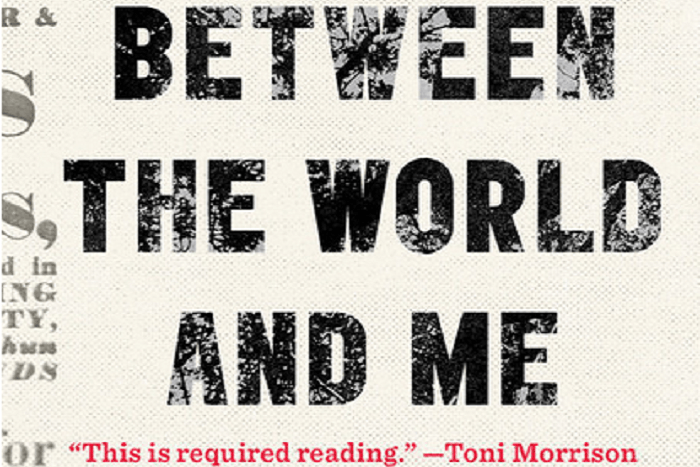
    In his book, “Between the World and Me,” Coates elaborates on all three issues as the relate to the Black American male existence in an open letter to his teenage son. When I first learned that the book was a letter to Coates’ son, I thought that the ‘World’ referred to both the literal world in which Coates lives and his son.

    I felt that Coates was sharing his take of the world with his ‘world.’ Reading BTWAM in this way made the content that much more powerful. Although there are other more thorough pieces on BTWAM elsewhere on the net (here, here, or here), I thought I’d share my reactions to 3 key themes Coates employs throughout the book: the body, the dream, and the whites.  (more…)

  • Why We Hate Bandwagon Fans

    Why We Hate Bandwagon Fans

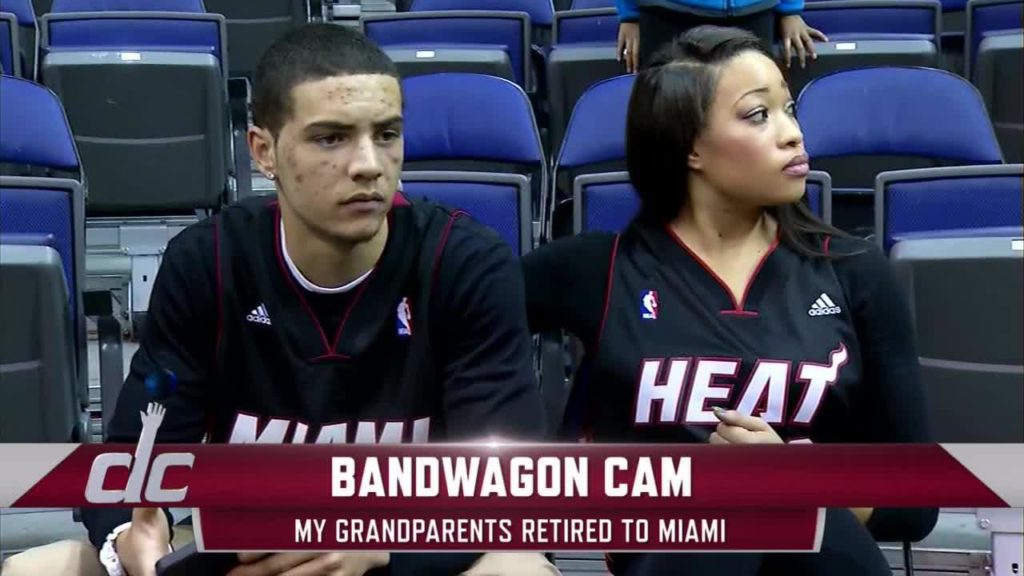
    Every time the NBA Finals (or any sports championship for that matter) come around, it strikes me that so many people are extremely averse to someone rooting for a team who isn’t a true fan.wizheat-bandwagon-cam-thumb-011514jpg This made me think to connect my ongoing research on a new consequence of brand attachment to the bandwagon hate phenomenon.
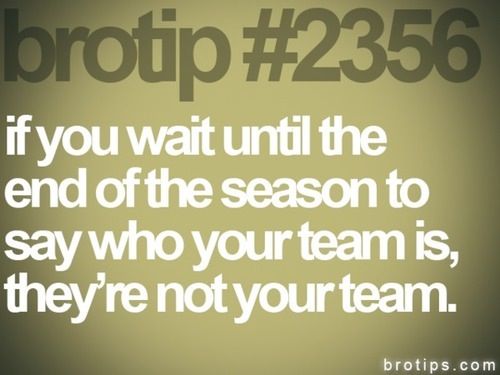
    Why might a committed fan might be upset that someone who they perceive to be less committed is rooting for their team to win?

    At first, I thought that the problem for the committed fans was that other people were rooting for their team. That didn’t make sense to me, though, because just rooting for one’s favorite team to win shouldn’t create adverse feelings. The only problem that might occur for the committed fans is if they thought the bandwagon fans’ support was disingenuous.

    What I think is more probable is the perception of the bandwagon fans’ commitment to the sports team.

    By definition, bandwagon fans only begin to support a team when they are doing well. That suggests that when the team was not doing so well, the bandwagon fans were nowhere to be found. For a committed fan, that may come across negatively. A committed fan has suffered through the rough years and remained loyal to the team. When the team finally performs well, their loyalty is rewarded with the ability to celebrate in the team’s success in earnest.

    Some of my on-going research offers a theoretical answer to this phenomenon. This research builds on work that distinguishes exchange relationships from communal ones (Goffman 1961) and suggests that consumers with high brand attachment might view brand commitment as a viable means to reciprocate benefits to their favorite brands. In the bandwagoners’ case, diehard fans may perceive them to reap the benefits of cheering on a winning team without reciprocating the required commitment. A whole load of psychological research suggests that people don’t like when others violate such a norm of reciprocity.

    What’s interesting about the animosity toward bandwagon fans, though, is that it does not necessarily have to be a fan of the bandwagon team who points out the norm violation or has negative feelings toward the bandwagon fan. Let’s say I see a bandwagon fan tweeting, “Go Warriors!” As a Laker fan who is currently struggling through their rebuilding phase, I’ll probably have less respect for that fan because they do not deserve whatever benefits come with claiming the Warriors as their team. I would feel better as a committed fan of a different team if I saw them qualify their transient fandom with, “I’m just rooting for them in this series,” or “I’m not a real Warriors fan.”

    What do you think?

    c06a70a619b2a14c66d3fcc9c1f41421

  • Why You Should Write Every Day via Broderick Turner [AUDIO]

    Why You Should Write Every Day via Broderick Turner [AUDIO]

    Many of us have professional or personal interests that require us to generate content. Whether you’re a professor or an entrepreneur, or many other titles in between, content is likely to be the currency that sustains your livelihood.

    Writing everyday has helped clarify my thinking, hone my logical arguments, and reduce stress.

    I recognized this early on in my pursuits to professorship, and I tried to get in the daily writing habit during my days at NYU. Back then, I used a fancy web app to write every day, but I fell off after a few weeks. Listen in below to hear why I think I failed my first go ’round.

    [audio-clammr mp3=”http://www.aaronjbarnes.me/wp-content/uploads/2016/06/Why-750words-Failed.mp3″]


    Now, with only a word processor and the encouragement of my friend (and future Dr.) Broderick Turner, I’ve been writing every day for over 6 months. It has easily been one of the best decisions I have made in my professional career.

    Writing everyday has helped clarify my thinking, hone my logical arguments, and reduce the some of the stress that comes with juggling multiple projects. It would seem that the universe is reinforcing my new new habits because after starting this daily writing journey, my work has been accepted (and recognized) at competitive conferences, rewarded by funding agencies, and requested by various outlets. Of course, there could be other reasons for these blessings, but confirmation bias. 😉

    Broderick does an excellent job of summarizing why we all should write every day. Hopefully, you will read it and be inspired to start writing today…and the next day, and the next day…